
Memrise: Languages for life
MemriseEducation
4.466.96K Reviews
- Version
- 2026.08.10.0
- Installs
- 50.00M
- Age Rating
- Everyone
Screenshots


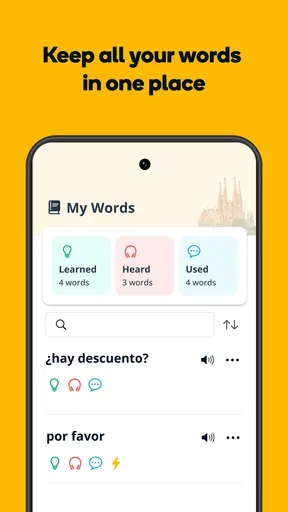
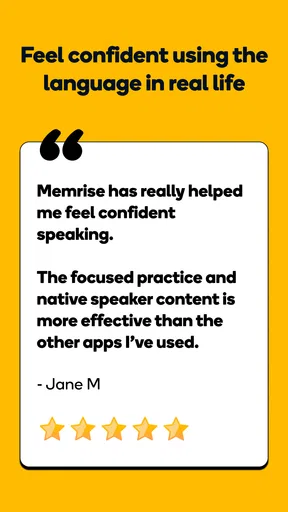
Our Review of Memrise: Languages for life
 Analysis by Appyee
When a language app feels confusing, the first problem is often not the lesson itself but working out what to study and how to fit it into a day. I find Memrise: Languages for life most useful when I treat it as a steady practice tool rather than expecting a few short sessions to make me fluent. It is an education app from Memrise, free to install, with optional in-app purchases ranging from $0.99 to $329.99 per item. Its average rating is 4.4 from around 1.6 million ratings, and it has over 10 million installs. That popularity makes it easy to discover, but the real question is whether its style suits the way you want to learn.
Where learners can get stuck
The initial choice of language and goal can set expectations that are hard to keep. A travel learner, someone refreshing a language they once studied, and a complete beginner may all want different things from the same course. I’d choose a modest, practical aim at the start: recognizing common expressions or becoming more comfortable hearing everyday speech. A broad goal such as “be fluent” can make any app feel disappointing because it does not tell you what to do in today’s session.
Another point of friction is the difference between recognizing a word and being able to use it. Repeated exposure can make vocabulary feel familiar, but that does not automatically mean you can recall it while speaking. I use the app as one part of a learning routine and pause occasionally to say a phrase aloud or make a simple sentence of my own. That small extra step helps reveal whether I know the word or have only learned to recognize it on screen.
Small setup checks that make practice easier
Before settling into a routine, I’d check that the selected language matches the one you actually want to learn and that your chosen goal fits the time you can realistically give it. If you are returning to a language after a break, starting at a level that is too easy may feel tedious; jumping too far ahead can make each session discouraging. It is worth adjusting your expectations early rather than blaming yourself for a mismatch between the course and your current ability.
Memrise is rated for Everyone, and its current version is 2026.02.11.0, with Android support beginning at version 8.0. Those details make it straightforward to assess basic compatibility, but they do not tell you how your own device will behave in every situation. I’d install it on the device you plan to use regularly, open a lesson while connected, and make sure the audio and video elements work in the setting where you usually study. Doing that before relying on it during a commute or trip can prevent a frustrating first session.
Recovering a routine after a missed day
If you miss a few days, I would not try to compensate with an unusually long study session. Return to a manageable lesson and use it to see which expressions still come to mind. If a word feels unfamiliar, revisit it instead of racing through new material to make up for lost time. In my experience, consistency is more useful than turning language practice into a backlog that feels like a chore.
For a practical reset, choose one situation you care about—greeting someone, ordering food, or asking for directions—and use that as a reason to review. Then listen closely to the example pronunciation and try repeating it at a natural pace. This is a useful bridge between app practice and real conversation: it makes the session more purposeful without requiring a separate study plan or a long block of free time.
Getting Started with Memrise
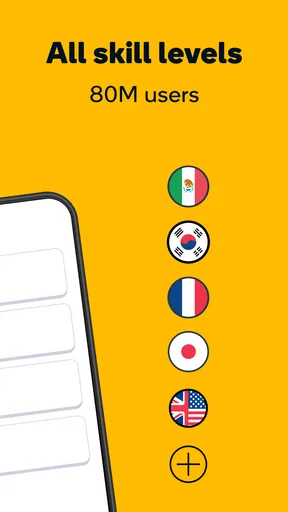
First things first, let’s talk about getting started. As soon as you download Memrise, you’re greeted with a user-friendly interface that guides you through selecting the language you want to learn. Whether it’s Spanish, French, Japanese, or any of the other languages they offer, you’re in for a treat. The app itself is designed intuitively, so you won’t feel lost navigating through your options.
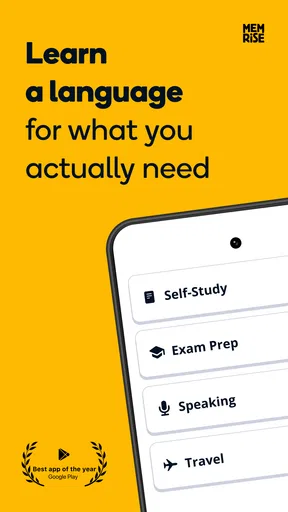
One of the coolest features is the personalized learning path. As you begin, the app asks about your language goals and proficiency. Are you looking to dazzle people on your next vacation or aiming to become fluent? Memrise tailors your experience accordingly, which is a nice touch.
A Unique Learning Experience
What sets Memrise apart from other language apps is its use of spaced repetition and immersive learning techniques. The app cleverly mixes traditional learning with engaging activities. Think of it as a fun game that rewards you as you progress. You’ll be surprised at how addictive learning new words can become!
Memrise incorporates real-life videos of native speakers into its lessons. This is a game-changer because it not only helps you understand the context but also aids in picking up the correct pronunciation and accent, which is often a tricky part of learning a new language.
The combination of review and native-speaker examples is most valuable when I use it actively rather than letting each clip pass as background noise. I’ll listen once for the general meaning, then replay the line and notice how the speaker joins words together or stresses a phrase. That attention can make the difference between recognizing a carefully pronounced vocabulary item and understanding it in ordinary speech. It is still practice, not a guarantee that every real conversation will be easy: speakers vary, talk at different speeds, and use expressions that a lesson may not cover.
Features That Make Memrise Stand Out
One feature I absolutely love is the “Learn with Locals” section. Here, you get to watch clips of locals using everyday language in real situations. It’s like having a pocket-sized cultural immersion experience!
Another highlight is the offline mode. Let’s face it, we aren’t always connected to the internet. With Memrise, you can download lessons and learn anytime, anywhere. It’s perfect for those long flights or when you’re off the grid.
If you plan to study offline, I’d prepare before leaving a reliable connection rather than assume every item you might want will already be available. Download the lessons you intend to use, then check that they open before you head out. This is especially helpful for a train ride or flight: a short planned review is more dependable than opening the app at the last moment and discovering you have not prepared the material you wanted.
Memrise also offers a community feel with its user-generated content. You can explore courses created by other learners and even create your own. It’s a fantastic way to explore niche interests or dialects that might not be covered by the standard courses.
Community-created material can be a useful complement, but I would treat it more selectively than a structured learning path. A course made for a niche topic may contain exactly the vocabulary you want, yet it may not give you the balanced progression you need as a beginner. I’d use it after identifying a specific gap—perhaps words for a hobby or a subject you discuss at work—and keep a regular course as the backbone of study. That way, extra content answers a real need instead of scattering your attention across unrelated lists.
Is Memrise Right for You?
So, who should give Memrise a shot? Honestly, anyone with a smartphone and a desire to learn a new language. Whether you’re a complete beginner or looking to brush up on your skills, Memrise has something to offer. It’s especially great if you’re someone who thrives on interactive learning rather than rote memorization.
A realistic use case is a learner with a few spare minutes before work or during a lunch break. I would choose one language, complete a focused practice session, and then try to recall a couple of useful expressions later that day without looking. A traveler could use the same routine to prepare for a specific trip, while someone maintaining an older skill could make short reviews part of a weekly rhythm. The advantage is that practice can fit around ordinary life; the trade-off is that short app sessions need occasional speaking or writing practice if you want to use the language beyond the screen.
Compared with a phrasebook, Memrise offers a more active way to revisit language and hear examples, while a phrasebook can be quicker when you need one specific expression immediately. Compared with a live class or tutor, the app is easier to use at your own pace, but it cannot provide the same personal correction or back-and-forth conversation. A textbook may offer a clearer route through grammar, which matters if you enjoy explicit explanations. I’d choose Memrise when vocabulary, listening exposure, and flexible practice are the priority, and pair it with another method if structured grammar or feedback is essential.
That said, while Memrise is a comprehensive tool, it might not replace traditional language courses for those needing in-depth grammar lessons. But as a supplementary tool or for casual learners, it’s pretty spot-on.
It may also be a poor fit if you want every session to revolve around open-ended conversation, detailed correction, or a formal syllabus. If you learn best by asking questions as they arise, a teacher or conversation partner will serve you better. And if you are easily pulled into collecting new words without revisiting them, set a clear limit for each session: finish a review, note one phrase you want to use, and stop there. The app works best when its material supports a purpose rather than becoming an endless stream of activity.
All in all, Memrise: Languages for life is a solid choice for anyone eager to add another language to their repertoire. It’s engaging, flexible, and backed by smart technology that adapts to how you learn best.
Ready to dive into a new language adventure? Give Memrise a try, and let me know how it goes! You might just find yourself ordering croissants in Paris or haggling in a Tokyo market with newfound confidence.
My practical verdict is to try it if you want a low-pressure way to build vocabulary and get more familiar with spoken language, especially when your schedule does not suit fixed lessons. Start with a goal you can picture in daily life, test a lesson and its audio in your usual study setting, and decide after a few sessions whether the pace feels motivating. The app is free to install, though optional in-app purchases are available, so check the purchase choices before committing to anything paid. With over 67,000 written reviews alongside its large rating base, it has reached many learners, but what matters most is whether its learning style helps you return tomorrow. For me, it is most convincing as a flexible companion to real practice—not a shortcut around it.
Verdict
Strengths of Memrise: Languages for life
- User-friendly interface for easy navigation.
- Wide variety of languages available.
- Offline mode for learning on-the-go.
- Engaging gamification elements.
- Progress tracking for motivation.
Limitations of Memrise: Languages for life
- Limited free content options.
- Some features require premium subscription.
- Occasional app performance issues.
- Pronunciation guides could be improved.
- Ads may interrupt free version.
Similar Picks in This Category
View All
Duolingo: Language Lessons
Duolingo4.7

Google Classroom
Google LLC2.8

Unacademy: Learn & Crack Exams
Unacademy3.2

Bible App for Kids
Life.Church4.4

Cake - Learn English & Korean
Cake Corp.4.7

Brainly: AI Homework Helper
Brainly4.5
Frequently Asked Questions
What is Memrise and how does it work?
Memrise is a language learning app designed to make learning new languages enjoyable and effective. The app uses a combination of video clips featuring native speakers, spaced repetition, and gamified activities to help users memorize vocabulary and phrases. It offers courses in multiple languages, catering to beginners and advanced learners alike.
Is Memrise suitable for beginners?
Yes, Memrise is suitable for beginners as it offers a wide range of courses that start with basic vocabulary and gradually increase in complexity. The app's intuitive design and interactive lessons provide a supportive environment for new learners, making it easy to track progress and build a solid foundation in a new language.
Does Memrise require an internet connection to use?
While Memrise offers many features that require an internet connection, such as accessing new lessons and updates, it also allows users to download courses for offline use. This feature is particularly useful for learners who wish to study on the go or in areas with limited internet access.
What languages can be learned on Memrise?
Memrise offers courses in over 20 languages, including popular options like Spanish, French, German, and Chinese. It also supports lesser-known languages, allowing users to explore diverse linguistic and cultural experiences. The app frequently updates its offerings to include new languages and course content.
Is there a free version of Memrise, and what are the premium features?
Memrise offers both a free version and a premium subscription. The free version provides access to a variety of courses and basic features. The premium subscription unlocks additional features, such as advanced learning statistics, offline mode, and exclusive content, enhancing the overall learning experience.
